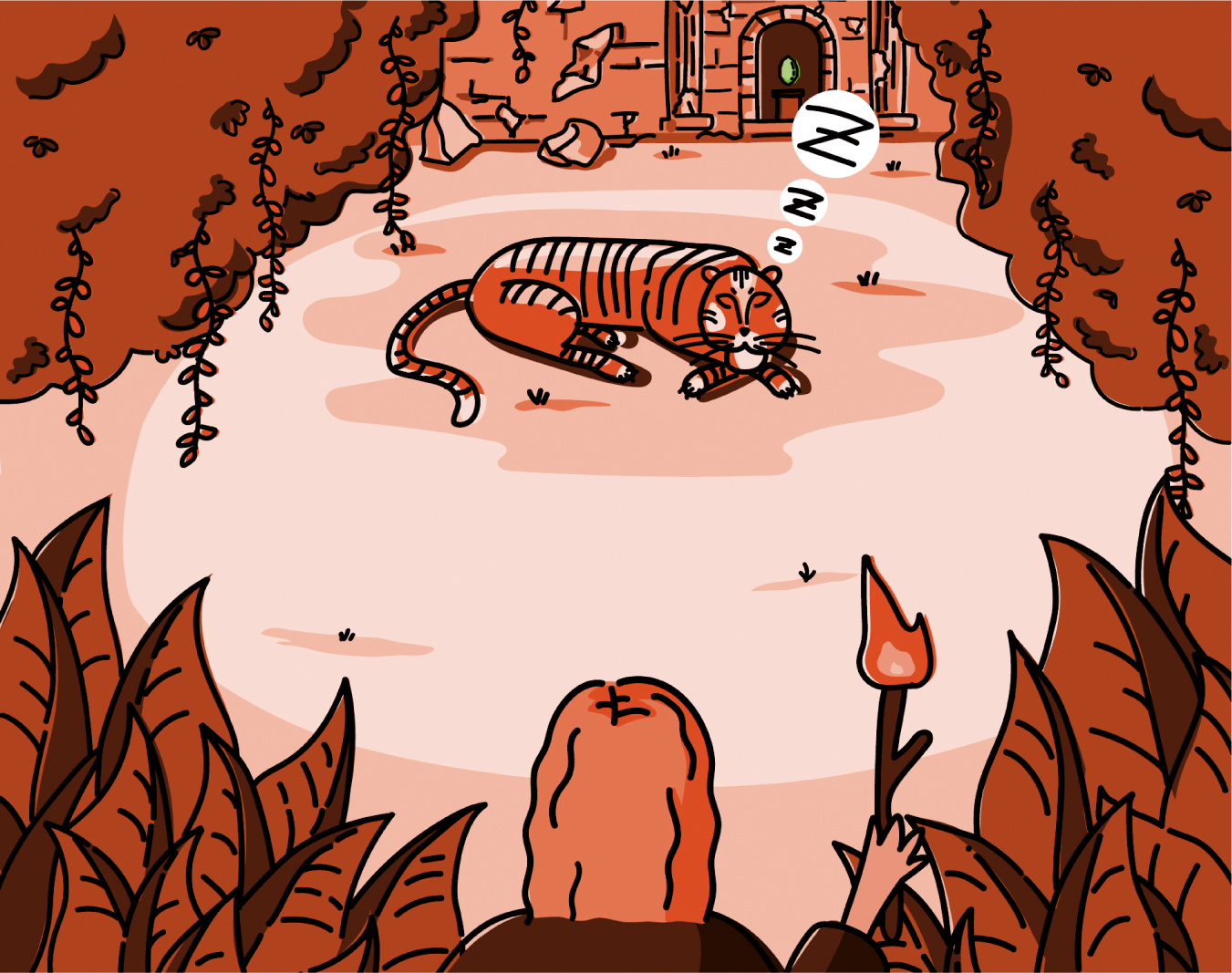
“We wore the medical device ourselves for six nights. That is where the real brief came from.”
The problem
SleepLoop is a research initiative from ETH Zürich and the University of Zürich. They built a head-worn device that reads brain activity during sleep, then plays a tone at the exact moment neurons synchronise. It deepens sleep, and it worked. In their trials with children recovering from concussion, patients still dropped out early.
What wore them down was everything around the device: the same questionnaires, the same fiddly setup every night, and nothing in the morning to show that any of it had registered. So the brief we took on was motivation. How do you get a child to come back to a clinical routine tomorrow, and the night after that?
Research
Patient privacy meant we could never speak to a child actually in the trial. So we assembled the picture from every angle that was open to us, including our own experience of wearing the device.
- 1
Bodystorming: we wore the medical device at home for six nights each and kept an Emotion Journey Map of it. It gave us the sharpest findings of the whole project. The instructions were confusing, we were never sure the electrodes were placed right, and there was nothing in the morning to confirm anything had been tracked. By night four we were bored of it ourselves.
- 2
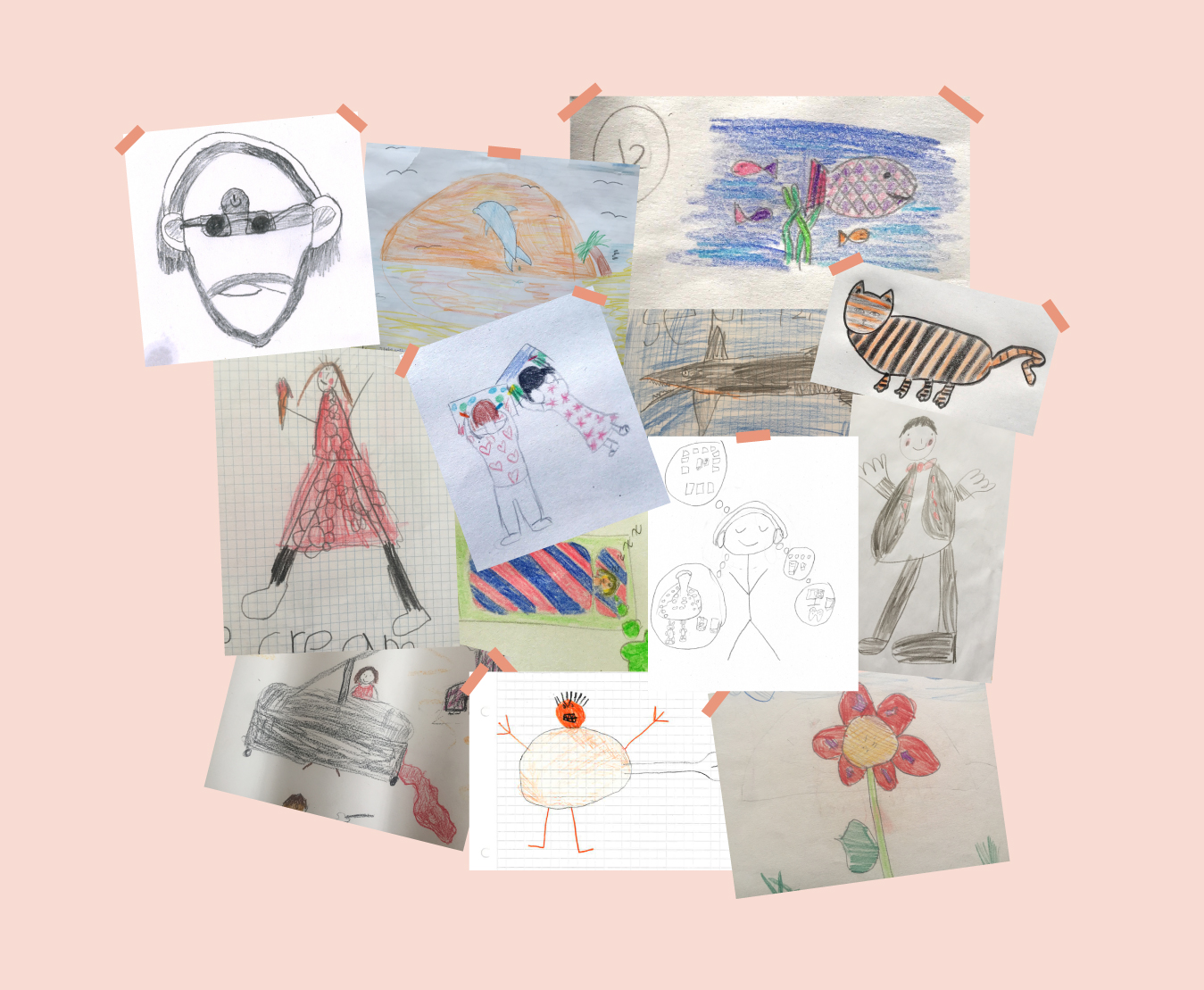
Cultural probes and classroom workshops with children aged 8–17, who documented their own bedtime routines. Most of them had a story in their evening somewhere.
- 3
Interviews with children, parents and teachers as the closest legitimate proxy for patients. Parents were already running informal reward systems to get compliance; children from about 10 up actively rejected anything that read as childish.
- 4
An as-is user journey mapped with the SleepLoop team, from concussion diagnosis through to the end of treatment.
The insight that set the direction
Most of what we shipped came out of those six nights.
Each part of the app answers a question we had asked ourselves in the dark. AR guidance for “is this on properly?”, the morning segment for “did it even work?”, the next chapter for “why bother again tomorrow?”.
Ideation
We framed it as one question: how might we help children use a medical wearable properly at home, and build an experience that motivates, entertains and informs them across the whole treatment?
- 1
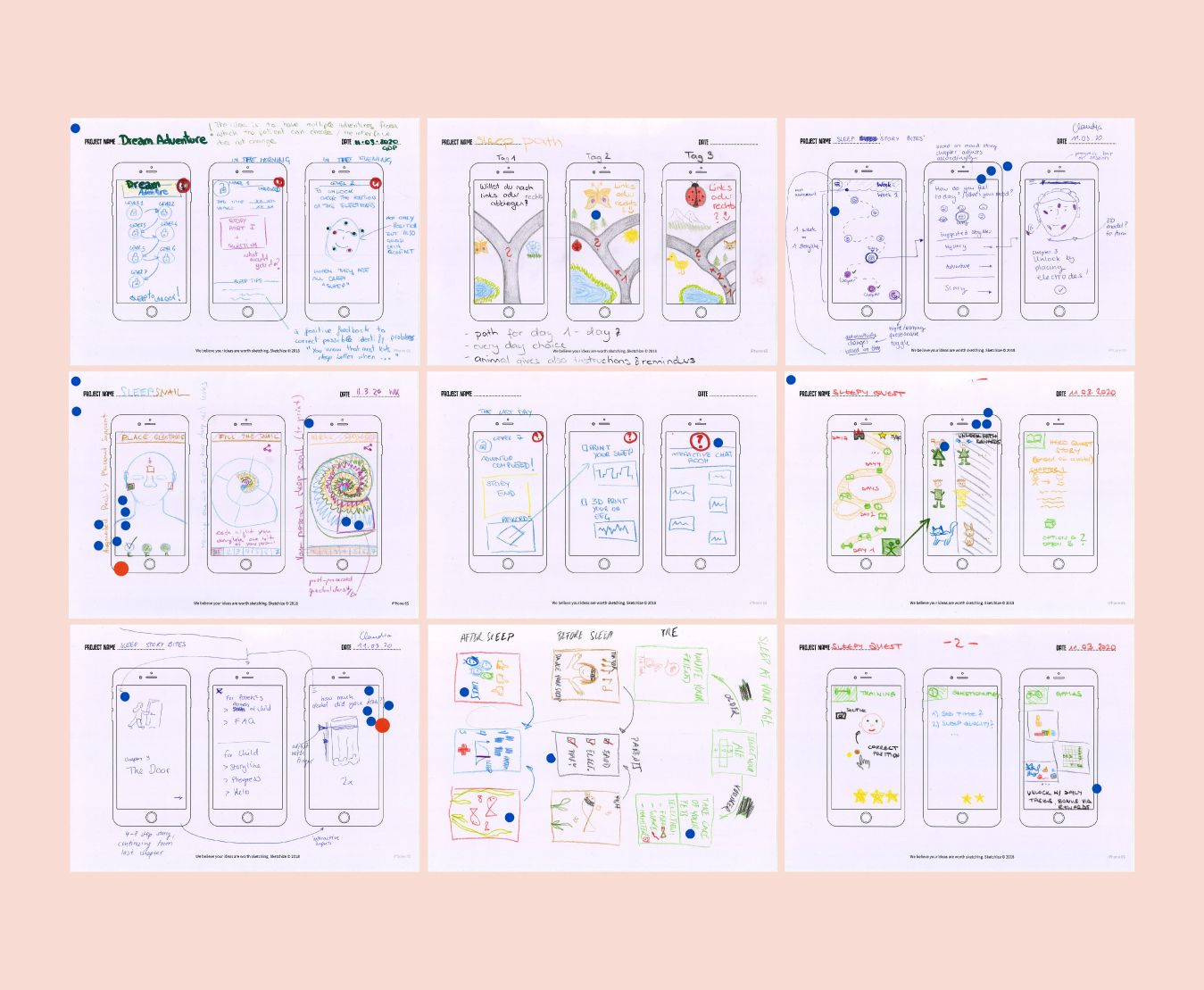
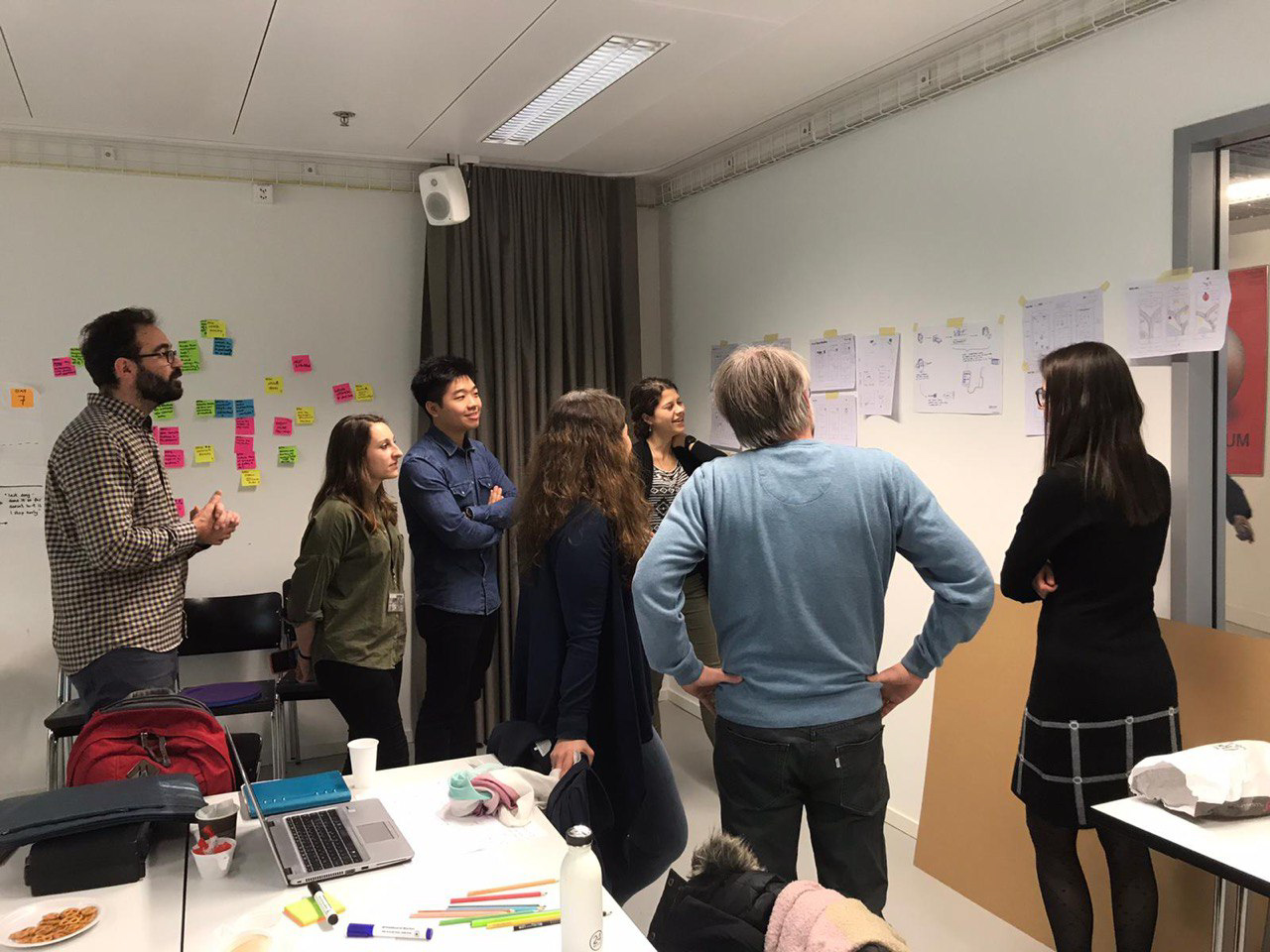
Ran an ideation workshop with SleepLoop's sleep researchers and paediatricians (affinity mapping, Crazy 8's, dot voting), so the clinical side owned the direction with us rather than reviewing it afterwards.
- 2
Ran storytelling co-creation workshops with children, who sketched their own storylines.
The trade-off we made
The children's own material was consistently absurd: zombies, talking dogs, the more bizarre the funnier. It was also the most engaging thing in the room, so following it would have been easy.
We ruled it out. Absurdity would have undercut the seriousness of a real medical treatment, and the same reasoning drove a second decision: the device itself never appears in the story. Keeping the fiction and the medicine apart let the app stay playful without turning the therapy into a game. “Child appropriate, but not childish” became the rule we designed to, and the interviews with 10-and-overs had already pointed at that line.
Design
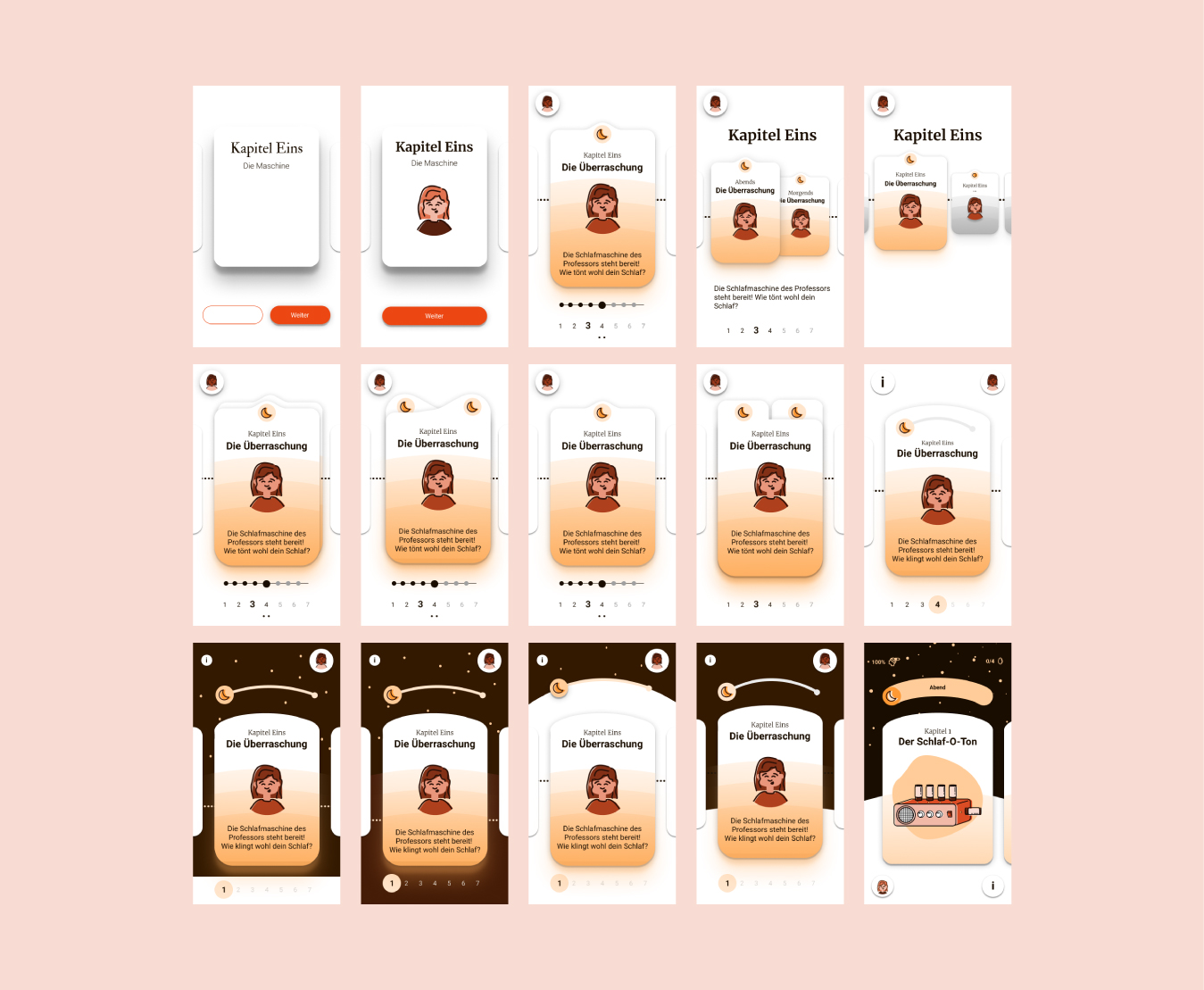
The chapter selection screen is the structural heart of the app: it shows where you are in the treatment, what you have finished, and what is still ahead. Content is time-gated; evening chapters in the evening, the educational segment in the morning, so the interface mirrors the therapy's own rhythm.
The hardest part was making the evening/morning pairing legible without explaining it. We took the answer from the sun and moon tracing their arc across the sky, and built a toggle that moves along that path.
The system
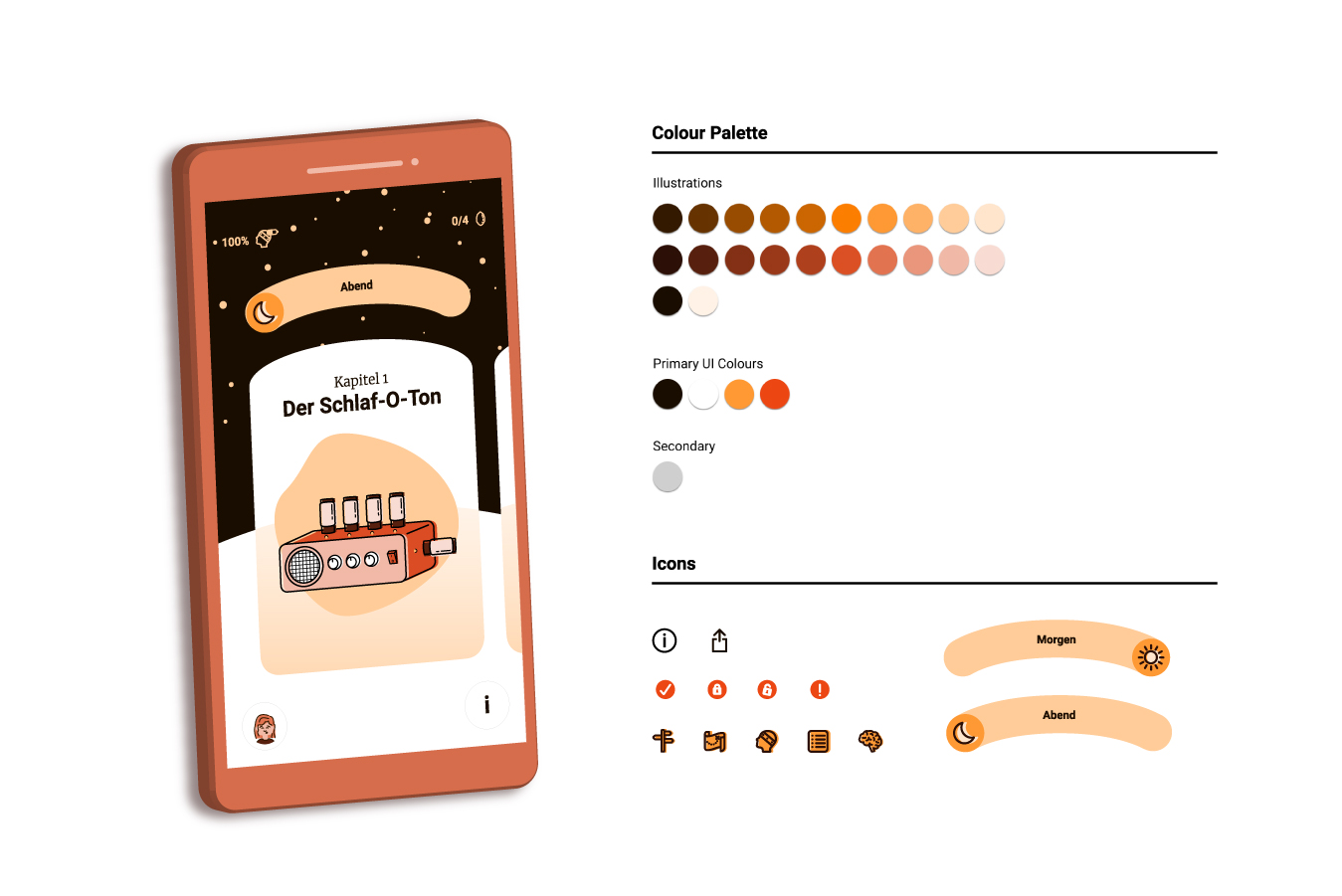
The palette started as a medical constraint. Blue light suppresses the ability to fall asleep, so the whole product sits at the warm end of the spectrum: oranges and reds on black. From there it was built out as a system: illustration ramps, UI colours, an icon set, and the Morgen/Abend toggle as a reusable component.
Testing
We tested the written, illustrated and prototyped experience with children aged 8–12. Three findings, one of which changed the design directly:
- Every tester understood the evening/morning toggle without prompting, and described it unprompted as fun.
- Every tester ignored the teaser text and went straight to the images. We cut the text and enlarged the illustrations in the second iteration.
- Half preferred an audiobook over reading; a clear direction for where the product went next.
Outcome
6 nights
wearing the medical device ourselves, mapped night by night
8–17
age range across probes, workshops and testing
4
awards and a UX Design Award nomination
The project won the AED Neuland Award (Gold, Interaction Design), the Swiss Design Association BA Award for the best bachelor graduation projects across all Swiss design schools, and a ZHdK Förderpreis, cited for process, innovation and design. It was nominated for the UX Design Award 2021, exhibited at Ars Electronica 2021, Vienna Design Week 2020, Schweizer Digitaltage 2020 and REFRESH #3, and covered in Hochparterre, form, VR Room and Wohnrevue. The project site is still online.
Credits
- Co-designer
- Claudia Buck
- Research partner
- The SleepLoop team, ETH Zürich & University of Zürich
- Mentors
- Dr. Joëlle Bitton, Verena Ziegler
- Support
- Nicole Foelsterl, Matthias Kappeler, Jenny Steinmann, Martin Dušek